Metric:
2 Egg Yolks
30gr Butter
( Melted )
10ml Lemon Juice
2gr Dijon Mustard
Pinch of Cayenne



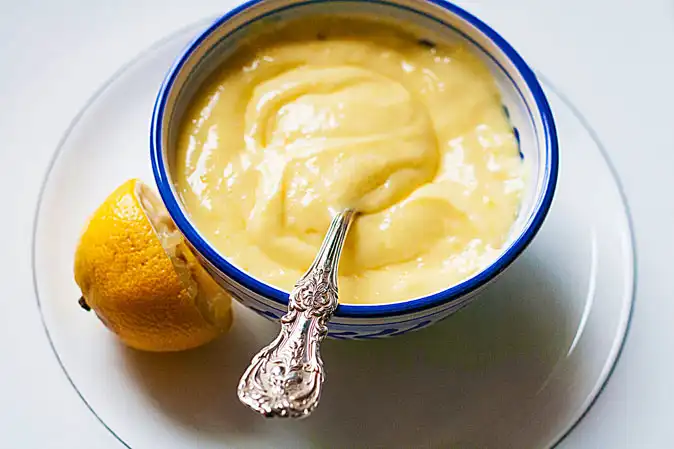
TRADITIONAL FRENCH RECIPE: Even in France there is a certain debate over the preparation of Hollandaise Sauce.
This Hollandaise recipe requires some skill and practice to prepare and hold. Properly made, it will be smooth and creamy with no hint of separation.
The flavor will be rich and buttery, with a mild tang from the flavorants (e.g. lemon juice).
It is best prepared and served warm, but not hot. There are several methods for preparing a hollandaise sauce and many many hollandaise Sauce recipes. All preparation methods require near-constant agitation, usually with a wire whisk.
One family of methods involves acidifying the egg yolks to aid in the formation of an emulsion, either with lemon juice or vinegar.
Escoffier uses a reduction of vinegar and water. Others use lemon juice or sherry. The acidified yolks are whisked gently over simmering water until they thicken and lighten in color (144 °F/62 °C). Then, as with a mayonnaise, the emulsion is formed by slowly whisking melted butter into it. Use of clarified butter is common. Some varieties of this preparation use water of various volumes and temperatures.
Alton Brown espouses quite a different method. The yolks, without acid, are cooked as above. Then the upper pan is removed from heat and cold cubed butter (unclarified) is whisked in, a few cubes at a time. The emulsion forms as the cubes melt. The pan is returned to heat only when the emulsion cools too much to melt more cubes. Lemon is used as a finishing flavor. This method takes more time than traditional methods, but is more reliable in that it is difficult to overheat the forming emulsion.
The above methods are known as "bain marie methods". Another family of methods uses a blender. Yolks are placed in a blender, then - at a temperature higher than appropriate for bain marie methods - butter is drizzled into the blender. Heat from the butter cooks the yolks. Blender methods are much quicker, although temperature control is difficult. The products of blender methods may be acceptable, but are generally considered to be inferior to the products of bain marie methods.
Joy of Cooking describes a preparation unlike all the above, using whole eggs, and slowly adding the egg mixture to melted butter over direct heat. It also includes variations incorporating sour cream and paprika, or cream and nutmeg.
Note that in all methods the temperature must be closely controlled. Too much heat and the yolks will curdle (180 °F/82 °C) or an emulsion break (separate). Too little heat and an emulsion will fail to form, or (once formed), will solidify. Once the yolks are prepared, the sauce should be not much warmer than required to maintain the butter in a liquid state, that is, a little warmer than body temperature. A finished sauce may be "held" in its emulsified state for several hours by keeping it warm. Success with freezing hollandaise has been reported, but it is not widely practiced.
A normal ratio of ingredients is 1 egg yolk : 4-6 Tbs. (55g-85g) butter. Flavorings may include lemon juice and salt to taste.
Skill Level:  |
Time: 1 Hour |
Price:  |
Makes: 1 Cup |
Ingredients:
| Conversions |
Directions:
01 - In a small bowl place the Egg Yolks and mix with a electric mixer at high speed for 3 minutes, or until it thickens and doubles in volume.
02 - Slowly add the Butter continuing mixing.
03 - Add the Mustard, Lemon Juice and Cayenne and mix until well combined.
04 - Taste and adjust if necessary. Serve.
Notes:
- Serve immediately, or store in a warm place or a vacuum flask for 1 hour, or in the fridge for 1 or 2 days.
- Make sure to double check the expiring date of the Eggs and all the other ingredients.
      |
| Written by: Uncut Recipes | Disclaimer |
| YOU MIGHT ALSO LIKE: |
| LATEST RECIPES: |