



It's about time someone shared a formal recipe for this dish! I'm so grateful!
Baked Japanese Sweet Potatoes Recipe ( Yaki Imo 焼き芋 )
Recipes > Japanese Recipes > Japanese Snack Recipes
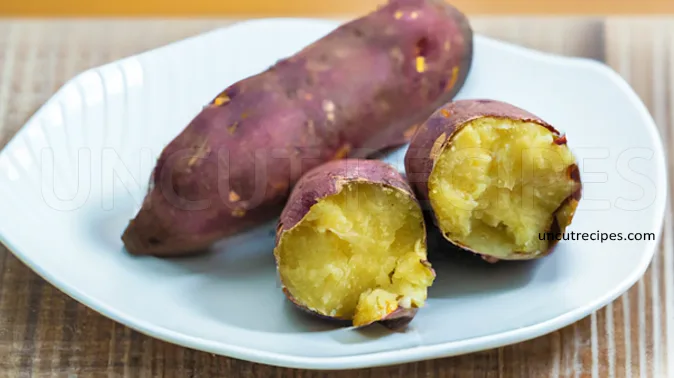
Imagine, for a moment, walking down the bustling streets of Tokyo in the chilly grasp of winter. You pull your coat tighter against the bite of the cold, and then, it hits you - the tantalizing aroma of baking sweet potatoes wafting through the crisp air. This is the magic of Yaki Imo, a beloved Japanese street food staple, simple yet powerfully comforting.
Yaki Imo is as much a symbol of Japanese culture as it is a humble treat. Steeped in tradition, these baked Japanese sweet potatoes have warmed hearts and hands throughout Japan for generations. They're a simple, unadorned celebration of nature's bounty, a testament to the beauty of minimalism, and an invitation to appreciate food in its purest form.
In this recipe, we will transport that enchanting street corner experience right into your kitchen. With just a few easy steps and the magic of your oven, you can recreate this rustic comfort food at home. All you need are Japanese sweet potatoes and a little patience to let them transform into something beautifully tender, sweet, and soul-soothing.
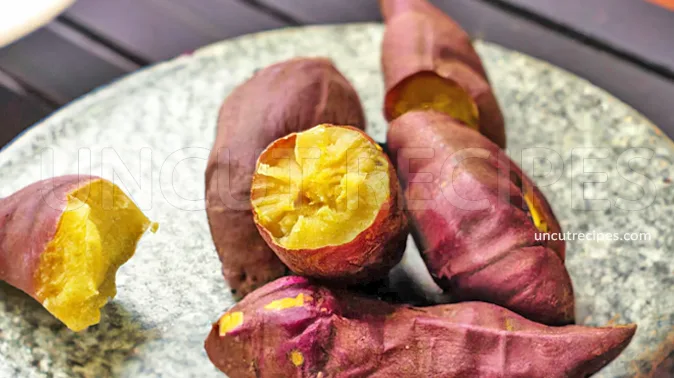
The result? A sweet potato that's gloriously caramelized on the outside and deliciously fluffy on the inside. Baked to perfection, the potatoes reveal a sweet, creamy interior that is deeply satisfying. It's like a big, cozy hug from the inside out!
JUMP TO:
INGREDIENTS:
The choice of ingredients in this recipe for Baked Japanese Sweet Potatoes (Yaki Imo 焼き芋) is straightforward as we're working with a single key component – the Japanese sweet potato.
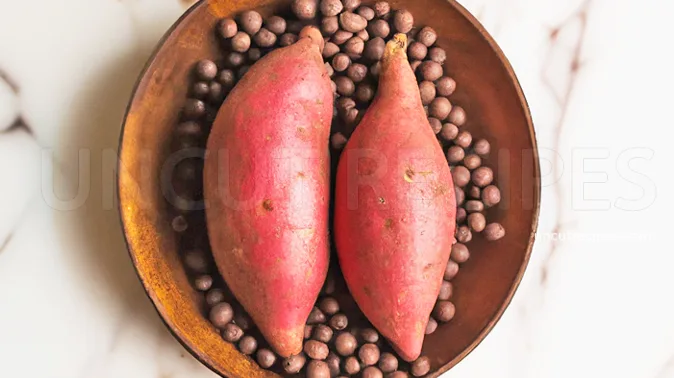
Choosing Japanese Sweet Potatoes: Your main focus here should be on selecting the best Japanese sweet potatoes. Japanese sweet potatoes, also known as Satsuma-Imo, have a distinct purple skin and a creamy, golden interior. Their unique, robust sweetness sets them apart from the regular sweet potatoes you may find elsewhere.
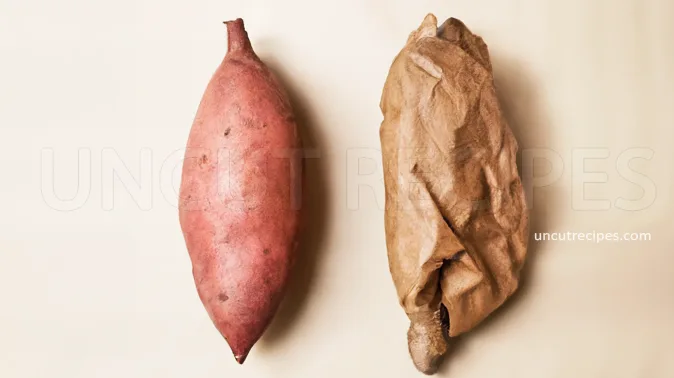
When choosing your Japanese sweet potatoes, look for firm, unblemished skins, and no signs of wrinkling or sprouting. They should feel heavy for their size, and the skin should have a uniform purple color. Avoid any potatoes that have soft spots or appear to have mold.
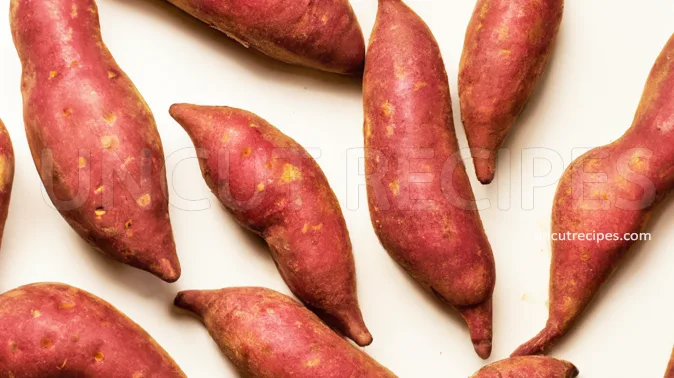
Understanding the Role of Japanese Sweet Potatoes: Japanese sweet potatoes bring more than just sweetness to this dish. Their naturally high sugar content caramelizes beautifully in the oven, lending a delicious, almost chestnut-like flavor to the dish. The interior, when baked, becomes incredibly creamy and rich, almost like custard. This unique texture and flavor profile make the Japanese sweet potato the star of this dish.
Alternatives: In case you cannot find Japanese sweet potatoes, you could consider using other sweet potato varieties, such as the American "yams" which are orange-fleshed sweet potatoes, or the white-fleshed sweet potatoes. However, be aware that these varieties will produce a slightly different flavor and texture. The closest in terms of texture would be the Hannah sweet potato with its creamy, yellow flesh, but it still won't have the distinct, rich sweetness of the Japanese variety. Hence, for the most authentic Yaki Imo experience, it is worth seeking out Japanese sweet potatoes.
MAIN STEPS:
Cleaning the Sweet Potatoes: Since you're baking the sweet potatoes with their skin on, ensuring they're thoroughly cleaned is crucial. Using a brush dedicated only for sweet potatoes is a good way to avoid any cross-contamination. Make sure to gently scrub the surface to remove all the dirt, but avoid scrubbing too hard to prevent any damage to the skin, which holds many nutrients.
Poking the Sweet Potatoes: It's essential to create enough venting points in the sweet potatoes to allow steam to escape and prevent them from bursting during baking. Using a wooden skewer or fork, make sure you poke deep enough and cover all the areas evenly.
Baking Time: The baking time mentioned in the recipe (around 90 minutes) is an estimate. Depending on the size and variety of your sweet potatoes, as well as your specific oven, the exact time might vary. You can check the doneness with a wooden skewer or fork; it should slide easily into the sweet potato. Overbaking could lead to a dried-out texture, whereas underbaking may result in a raw center.
Cooling Down: After baking, allow the sweet potatoes to cool down slightly before handling. Not only will this prevent you from burning yourself, but this brief rest period also helps the sweet potatoes to finish cooking with residual heat and enhances the flavor.
Serving: Baked Japanese Sweet Potatoes are best enjoyed warm. As they cool, the texture changes and they lose some of their sweet, creamy charm. So, try to time your cooking so that you can serve them right when they are at their best - warm, comforting, and delectably sweet.
SERVED WITH:
Starter: Avocado Sashimi (Japan): A simple and healthy dish from Japan that features thin slices of ripe avocado, often served with soy sauce and wasabi. Its creamy texture and subtle flavor could be a nice lead into the sweet, earthy profile of the Yaki Imo.
Side Dish: Stir-fried Bok Choy with Garlic (China): This is a classic Chinese side dish featuring bok choy (a type of Chinese cabbage) stir-fried with garlic. It offers a light, savory contrast to the sweet and filling baked potatoes.
Main Course: Teriyaki Salmon (Japan): A popular Japanese dish where salmon fillets are glazed and cooked with a sweet and savory teriyaki sauce. The rich, umami flavor of the salmon would complement the sweetness of the Yaki Imo well.
Main Course: Bulgogi (South Korea): A Korean BBQ dish made from thinly sliced beef marinated in a sweet and savory sauce, then grilled. Its robust flavors would balance the subtle sweetness of the sweet potatoes.
Drink: Genmaicha Tea (Japan): This is a traditional Japanese green tea mixed with roasted brown rice. It has a unique, toasty flavor that can help cleanse the palate after enjoying the sweet potatoes.
ALTERNATIVES:
Snack: Sweet Potato Fries (USA): A popular alternative to traditional French fries, these are made by cutting sweet potatoes into strips, then frying or baking them until crisp. They can be served with a variety of dipping sauces.
Soup: Sweet Potato and Coconut Soup (Thailand): This Thai-inspired soup is a creamy, slightly sweet, and spicy concoction made from sweet potatoes and coconut milk, seasoned with ingredients like lemongrass, ginger, and chili.
Main Course: Sweet Potato and Black Bean Tacos (Mexico): A delicious vegetarian option from Mexico where roasted sweet potato cubes and seasoned black beans serve as the filling for soft corn tortillas.
Dessert: Sweet Potato Pie (Southern USA): A traditional dessert in Southern American cuisine where a sweet filling made from sweet potatoes is baked in a pie crust. It's a classic comfort food especially during the holiday season.
Dessert: Sweet Potato Gulab Jamun (India): Gulab Jamun is a popular Indian dessert, and this version uses sweet potatoes. The sweet potato balls are deep-fried and then soaked in a sweet syrup.
Snack: Daigaku Imo (Japan): Literally translating to "university potatoes", this is a popular Japanese snack made from sweet potatoes glazed with a sweet syrup, then sprinkled with black sesame seeds. This dish supposedly originated from Tokyo University, hence the name.
HISTORY:
Welcome to a cozy tale of the humble Japanese sweet potato, or as it's called in the land of the rising sun, Yaki Imo. The story of this humble root vegetable's rise to fame is as warming as the dish itself!
As the chronicles of history tell us, the sweet potato made its way to Japan somewhere in the 17th century, during the Ryukyu Kingdom era, by way of trade with China. Initially, sweet potatoes were not a popular food item, largely due to their unfamiliar taste. But as fate would have it, a famine in the early 18th century altered the course of this humble spud's destiny. With rice production falling drastically, the resilient sweet potato, capable of growing in poor soil conditions, came to the rescue. It quickly became a crucial food source, saving countless lives, and subsequently, found a cherished place in Japanese cuisine and hearts.
While the actual inventor of Yaki Imo remains shrouded in mystery, it's evident that the Japanese people's resourcefulness and respect for nature led to the creation of this simple, nutritious dish. Baked directly in fire or hot stones, Yaki Imo embodied the spirit of 'Mottainai', a Japanese term conveying a sense of regret over waste.
The cultural significance of Yaki Imo cannot be overstated. The onset of autumn was often signified by the melodious call of the Yaki Imo vendor, creating a nostalgic charm around this dish. These vendors, pushing their stone or wood-fired ovens on wheels through the streets, became an iconic part of Japanese culture. The sight and sound of a Yaki Imo vendor, and the scent of baking sweet potatoes, is an experience many Japanese associate with comforting memories of chilly autumn evenings.
Today, Yaki Imo remains deeply ingrained in Japanese culture. While the sight of traditional Yaki Imo vendors has decreased with the rise of convenience stores, the love for this dish has not waned. During the autumn and winter seasons, supermarkets and food stores often dedicate a corner for baking sweet potatoes, keeping the tradition alive.
Modern interpretations of the dish have also emerged, with Yaki Imo being used in desserts, salads, and even as toppings on pizzas. Yet, it's the traditional, simply baked Japanese sweet potato, with its natural sweetness and creamy texture, that continues to hold a special place in the hearts of the Japanese people. From a lifesaver during a famine to a symbol of the seasons, the Yaki Imo's journey is a testament to the beauty of simplicity and the enduring charm of traditional foods.
And that, dear readers, is the endearing tale of the Yaki Imo, a simple dish with a history as rich and heart-warming as its flavor.
TIPS:
Quality Matters: Always remember the outcome of your dish greatly depends on the quality of your ingredients. Make sure to choose sweet potatoes that are firm, have a clean skin, and no cuts or bruises. If mold has grown... get rid of them!
The Art of Poking: Poking the sweet potatoes not only allows steam to escape but also helps in cooking the potato evenly from inside. Try to make the holes evenly spaced and at a uniform depth for the best results.
Cooking on Lower Heat: Cooking the sweet potatoes at a relatively low temperature for a longer time helps in caramelizing the natural sugars within, which brings out a depth of flavor that is truly delightful.
Tweak the Traditional: If you'd like to add a unique touch to your dish, consider adding a little sprinkle of coarse sea salt right after you remove the potatoes from the oven. The salt will stick to the skin and provide a lovely contrast to the sweet, creamy inside of the potato.
Use the Right Tools: If you're looking for a truly authentic experience, consider investing in a Japanese sweet potato roaster. It's a specialty ceramic or cast-iron tool that can be used in your oven or over a flame, and it provides a unique, smoky flavor that's hard to achieve in a conventional oven.
Recipe Information
Skill Level
|
Time 1h 30 Minutes |
Price
|
Serves 4 People |
Healthiness |
Nutritional Information |
Ratings (Add Rating & Review) |
Reviews 20 Reviews |
Ingredients:
-
4 Japanese Sweet Potatoes
( Satsumaimo )
Allergens
| Based on the ingredients of this recipe, there are no common allergens present such as gluten, dairy, eggs, soy, peanuts, tree nuts, fish, shellfish, or sesame. However, if any of the ingredients were processed in a facility that also processes allergens, there could be a risk of cross-contamination. It's always best to check the packaging and labels of each ingredient to make sure there are no allergen warnings. |
Directions:
01 - Preheat the oven. Set the temperature to 160C / 325F.
02 - As the oven warms, give your sweet potatoes a thorough clean. Hands alone is fine... but even a dedicated brush (only used for Sweet Potatoes ) works wonders to get rid of any dirt that might be stuck on the skin. But don't use kitchen sponges. That's a no! no!
03 - With the sweet potatoes cleaned, pat them dry. A clean kitchen towel or paper towels will do the trick.
04 - Now, using a wooden skewer or a fork, make multiple pokes on each sweet potato. These pokes aren't random; they allow steam to escape during the baking process, ensuring your sweet potatoes won't burst.
05 - Now that your sweet potatoes are oven-ready, place them on a baking sheet that's been lined with parchment paper. Slide them into your now preheated oven. They'll need to bake for around 90 minutes. However, ovens can vary, so they might need a little less or a little more time. The best indicator they're done is when a wooden skewer slides easily into them.
06 - Once baked, carefully remove the sweet potatoes from the oven. Give them a few minutes to cool down slightly before handling. The steam within the potatoes during baking creates a lovely, moist texture inside.
07 - Serve the sweet potatoes while they're still warm.
Notes:
DO NOT USE ALUMINUM FOIL, HERE'S WHY: Aluminum foil is a kitchen staple that's used in various cooking techniques such as grilling, roasting, and baking. However, recent studies have raised concerns about its safety when used in cooking. This is due to the potential of aluminum leaching into food, especially when cooking acidic foods like tomatoes or when using spices.
When we consume food cooked with aluminum foil, we inevitably ingest small amounts of aluminum. While our bodies can handle small amounts of aluminum effectively, consistent exposure over time might pose health risks. Aluminum accumulation in the body has been linked to several health issues including neurodegenerative diseases like Alzheimer's, kidney problems, and bone disease.
Moreover, using aluminum foil in high-temperature cooking like grilling or broiling can lead to the creation of tiny bits of aluminum oxides that could potentially be inhaled. This could pose additional health concerns particularly for those with respiratory conditions.
However, it's important to note that more research is needed to fully understand the link between aluminum exposure and these health conditions. Some health agencies maintain that the amount of aluminum we might consume from foil is likely to be minimal compared to what we could ingest from other sources like water, air, and certain foods.
That said, if you want to err on the side of caution, alternatives to aluminum foil are available. For instance, you can use oven paper, parchment paper, silicone baking mats, or oven-safe dishes for baking.
Preparing the Potatoes: After cleaning the sweet potatoes, make sure they are completely dry before poking them with a skewer. Wet skin can lead to sogginess and uneven cooking.
Oven Temperatures: Oven temperatures can vary significantly, affecting the cooking time. If you are unsure about your oven's accuracy, consider using an oven thermometer to verify the temperature.
Checking Doneness: The sweet potatoes might look done on the outside, but it's essential to check their doneness by inserting a skewer or fork. If it goes in smoothly without resistance, your sweet potatoes are done. If not, give them a little more time.
Storing: If you have leftovers, allow the sweet potatoes to cool completely before storing them in the refrigerator. They can be kept for up to a week in an airtight container. To reheat, you can warm them up in the oven or in the microwave.
Alternatives: If you can't find Japanese sweet potatoes, you can use other sweet potato varieties. However, the taste and texture might vary slightly.
Nutritional Information
( Per Portion )
|
Calories |
113 kcal (6%) |
| Total Carbohydrate | 27g (10%) |
| Cholesterol | 0mg (0%) |
|
Total Fat |
0.1g (0.15%) |
| Saturated Fat | 0g (0%) |
| Polyunsaturated Fat | 0g |
| Monounsaturated Fat | 0g |
| Trans Fat | 0g |
| Fibers | 4g (16%) |
| Protein | 2g (4%) |
| Sugar | 5g (10%) |
|
Vitamin A |
20296 IU (405%) |
|
Vitamin B1 (Thiamin) |
0.1mg (7%) |
| Vitamin B2 (Riboflavin) | 0.1mg (8%) |
| Vitamin B3 (Niacin) | 1.4mg (7%) |
| Vitamin B5 (Pantothenic Acid) | 0.8mg (16%) |
| Vitamin B6 | 0.3mg (18%) |
| Vitamin B7 (Biotin) | 0mcg (0%) |
| Vitamin B9 (Folate) | 29mcg (7%) |
| Vitamin B12 | 0mcg (0%) |
| Vitamin C | 21.6mg (24%) |
| Vitamin D | 0 IU (0%) |
| Vitamin E | 0.8mg (5%) |
| Vitamin K | 4mcg (3%) |
| Choline | 13.5mg (3%) |
| Carnitine | 0mg |
|
Calcium |
32mg (3%) |
|
Chloride |
55mg (2%) |
| Chromium | 1mcg (3%) |
| Copper | 0.2mg (22%) |
| Fluoride | 2mcg (0.07%) |
| Iodine | 3mcg (2%) |
| Iron | 0.7mg (4%) |
| Magnesium | 33mg (8%) |
| Manganese | 0.5mg (22%) |
| Molybdenum | 6mcg (13%) |
| Phosphorus | 64mg (5%) |
| Potassium | 475mg (10%) |
| Selenium | 0.6mcg (1%) |
| Sodium | 58mg (4%) |
| Sulfur | 37mg (2%) |
| Zink | 0.3mg (3%) |
* Percent Daily Values are based on a 2,000 calorie diet. Your daily values may be higher or lower depending on your calorie needs.
** Nutrient information is available for all ingredients in this recipe. Amount is based on available nutrient data collected from all over the internet.
(-) Information is not currently available for this nutrient. If you are following a medically restrictive diet, please consult your doctor or registered dietitian before preparing this recipe for personal consumption. |
     |
| Written by: Uncut Recipes | Disclaimer |
| YOU MIGHT ALSO LIKE: |
| LATEST RECIPES: |
20 Reviews

Alma
June 15, 2023 |
Melinda
June 15, 2023 I was previously using kitchen foil to cook these, but your method and the insights shared in this recipe have convinced me to change. No more foil for me! |
Mercy
June 14, 2023 This recipe was remarkably straightforward and offered a lot of leeway for adjustments. |
Evangelina
June 12, 2023 I tried both variations—wrapped and unwrapped (using baking paper, of course). However, I found the texture of the wrapped ones more appealing. |
June 20, 2023
I've been cooking these for years following my self-devised method, but the outcomes were inconsistent. Your recipe, so straightforward, improved the results tremendously. Much appreciated!